
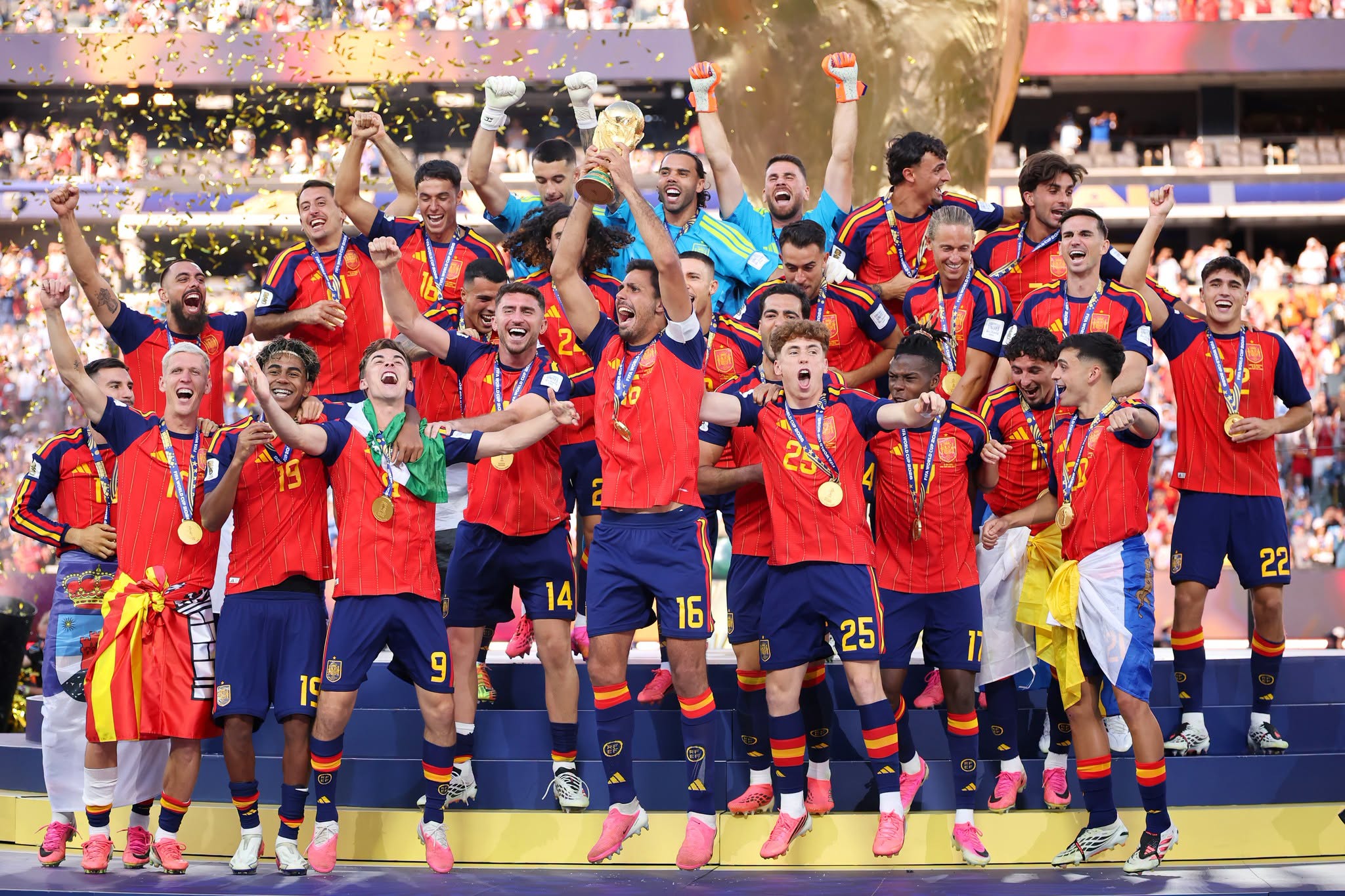
At the beginning of extra time, Spain’s 2026 home shirt was still simply the current Spain shirt. By the 106th minute, it had become the shirt in which La Roja won their second World Cup.
Ferran Torres’ winning goal against Argentina did more than settle the final. It permanently changed what this shirt represents. From now on, every time it appears in a collection, a photograph or a football shop years from today, it will carry the same four-word description:
The second-star shirt.
Spain defeated Argentina 1–0 after extra time, winning the World Cup for the second time, 16 years after their first title in South Africa. Torres, who began the final as a substitute, scored the decisive goal in the 106th minute.
A football shirt has two lives
The first life begins when a shirt is released: people judge the design, they argue about the collar, they complain that the previous one was better. Some buy it immediately, others wait until it appears in the sale.
At that stage, it's still a product.
The second life begins when something unforgettable happens in it: a goal, a trophy lift or one photograph can give a shirt an identity that no marketing campaign could manufacture. Supporters stop seeing only red fabric, an adidas logo and a federation badge. They remember where they were, who they watched with and what happened while the players were wearing it.
That is the difference between a football shirt people own and a football shirt people search for years later.
Spain’s 2010 shirt will always lead back to Andrés Iniesta’s goal. It does not need an introduction. Mention the shirt and the moment appears with it.
The 2026 shirt now has its own moment.
Why this shirt has the ingredients of a future classic
Winning a tournament does not automatically make every shirt iconic. Football history is full of champions’ kits that collectors barely discuss.
The shirts that last usually have a clear story attached to them and Spain’s 2026 shirt has several. It represents the country’s second World Cup rather than another routine tournament victory. It belongs to a new generation that followed one of the most celebrated teams in international football. And its defining moment is unusually simple to remember: Ferran Torres, extra time, minute 106, against the defending champions.
The design also feels unmistakably Spanish. The home shirt uses a vivid red base, dark blue details and fine pinstripes influenced by the colours of the Spanish flag.
But design alone is never enough. Had Spain gone out earlier in the tournament, the same shirt would have remained visually identical. After last night, it belongs to a completely different category.
The design stayed the same. The story changed.
Does winning the World Cup make the shirt valuable?
Potentially, but this is where the reality is more interesting than the hype.
A World Cup victory does not suddenly turn every standard retail shirt into an extremely rare collector’s item. Thousands may already have been produced and sold. Some versions will remain easy to find, while others could become much harder to source.
For collectors, the details will matter. An authentic player-spec version will normally be more desirable than a basic fan version. Tournament patches, an original nameset, long sleeves and less common sizes can all affect demand. Condition will matter too: cracking prints, pulls, stains and fading can make two apparently identical shirts worth very different amounts.
A Ferran Torres nameset now has an obvious connection to the final. Shirts featuring other defining players from this generation may also become strongly associated with the tournament.
Then there is provenance. A retail shirt celebrates the moment. A match-issued or match-worn shirt was physically part of it. Those are completely different categories and should never be presented or priced as if they were the same thing.
So yes, the 2026 shirt has gained historical importance. That does not mean every version will become rare overnight.
And honestly, that is healthier for collectors. Buy the shirt because the moment means something to you, not because somebody on TikTok says it's cool.
Explore our collection of authentic vintage Spain football shirts
Spain’s older shirts just gained a new chapter
The victory also changes how we look at the shirts that came before it. Until last night, the 2010 shirt represented Spain’s only World Cup win. Now, it represents the first.
That sounds like a small difference, but it changes the wider story of the collection. Spain’s football shirt history is no longer a journey towards one extraordinary peak, it now connects two world-champion generations, separated by 16 years.
Earlier shirts show the decades before Spain reached the top: the 2010 shirt represents the breakthrough, the shirts carrying the first star document everything that followed and the 2026 shirt closes that chapter by earning another title.
This is why collecting national team shirts becomes more interesting over time. A new tournament does not replace the older pieces, it just gives them more context.