
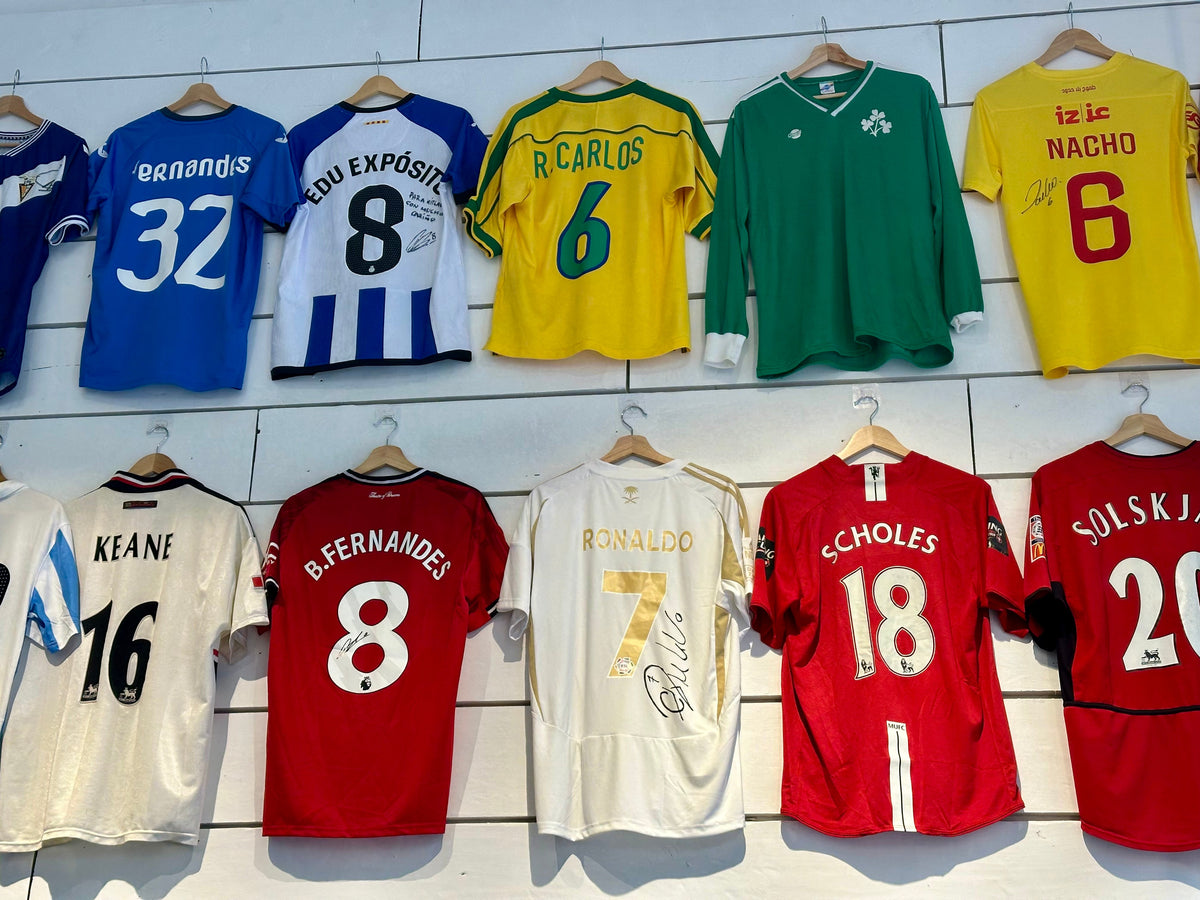
Buying a vintage football shirt is about more than finding an old jersey. Every shirt has a story: a legendary player, an unforgettable season, a historic match or a design that represents an entire era of football.
But if you are buying your first vintage shirt, knowing what to look for can be confusing. How should it fit? How do you know it is authentic? What condition should you expect? Is a player shirt different from a regular replica?
This guide covers everything you need to know before adding a vintage football shirt to your collection.
1. Choose the Right Size: Vintage Shirts Fit Differently
One of the biggest surprises for first-time buyers is that vintage football shirts often do not fit like modern shirts. Football shirts from the 80s, 90s and early 2000s were usually designed with a more relaxed fit, while modern shirts are often slimmer and more athletic.
A vintage shirt labelled Large (L) does not always fit like a current Large.
Before buying, always check:
- The measurements (especially chest width and length)
- The sizing guide provided by the seller
- Whether the shirt is an original vintage piece or a modern retro remake
A good rule:
- Want a fitted look? Choose your usual size.
- Want a relaxed, oversized vintage look? Consider sizing up.
2. Understand Shirt Condition
Vintage football shirts are decades old, so condition is an important part of their value and character. A vintage shirt may have:
Excellent condition: A shirt with minimal signs of wear. Colours remain strong and there are few or no visible imperfections.
Very good condition: Light signs of previous use, but the shirt remains in great shape.
Good condition: Visible signs of age or wear, which may include small marks, fading or minor imperfections.
Worn condition: A shirt with significant signs of use. These pieces can still be highly desirable, especially if they are rare or connected to an iconic moment.
Remember: a vintage shirt is not expected to look brand new. The small details that show its age are often part of what makes it special.
3. How to Check if a Football Shirt Is Authentic
With the popularity of vintage football shirts, knowing how to identify an authentic piece has become increasingly important. Here are some things collectors look at:
Manufacturer: Brands such as Nike, Adidas, Umbro, Puma and Kappa have produced iconic football shirts across different eras. The manufacturer can help identify the approximate period when the shirt was released.
Sponsor: Sponsors can be one of the easiest ways to date a shirt. For example, a club may have had different sponsors throughout the years, helping narrow down the season.
Labels and Tags: Inside labels can provide useful information, including:
- Manufacturing details
- Product codes
- Size information
- Era-specific branding
Design Details: Collectors also look at:
- Collar style
- Stitching
- Fabric patterns
- Badge placement
- Sleeve details
- Competition patches
Authenticating a vintage shirt is about looking at the whole picture, not just one detail.
4. Player Names and Numbers: What Should You Know?
A shirt with a player name and number can make it even more special. Wearing a shirt with Zidane, Ronaldo, Beckham, Ronaldinho or Henry on the back connects it directly to a football moment and a player’s legacy.
However, not every player version is the same. You may find:
Replica shirts: The version sold to fans and supporters.
Player versions: A shirt made closer to what players wore, often with different materials, fits or details.
Match-worn shirts: A shirt actually worn by a player during a match. (These are much rarer and usually belong to the highest level of football memorabilia.)
5. How to Wash and Care for a Vintage Football Shirt
Vintage shirts need more care than regular clothing. To keep your shirt in the best condition:
Always:
✅ Wash cold
✅ Turn the shirt inside out before washing
✅ Use a gentle cycle or hand wash
✅ Let it air dry naturally
Avoid:
❌ Tumble drying
❌ High temperatures
❌ Strong chemicals or bleach
❌ Ironing directly over prints or badges
For shirts with names, numbers, or older sponsor prints, extra care is especially important because these details can become fragile over time.
6. Where Should You Buy a Vintage Football Shirt?
A good vintage football shirt seller should provide:
- Clear photos of the actual item
- Accurate sizing information
- Details about condition
- Honest descriptions
- Knowledge of football history
Avoid sellers who only show stock images or provide very little information about the shirt.
Final Thoughts
Buying a vintage football shirt should be exciting, not complicated. Whether you are searching for your childhood favourite, your favourite player or a rare design you have never seen before, the right shirt can become one of the most meaningful pieces in your wardrobe. Take your time, understand what you are buying and choose a shirt that tells a story you want to wear.